The Matching-Furniture Myth: A Display Can Belong Without a Set
Display styling without matching furniture can connect a screen to the room through one repeated detail, helping the arrangement feel considered without a coordinated set.
Display styling without matching furniture begins with a familiar snag: the screen looks as if it arrived from another room, while the chair, shelves, and side table seem to belong together. The usual response is to hunt for a matching console or frame. Often, the room needs a quieter link, not another coordinated purchase.
A display can sit comfortably among unlike objects when one visual detail repeats nearby. A familiar color, material, or line can tie the arrangement together without making every piece identical. It works like a refrain in a song: one element returns, while the rest can vary.
Why does the display look like an outsider?
A screen has a broad, uninterrupted face and a distinct outline. Nearby furniture may have visible grain, curved legs, open shelves, or soft upholstery. That difference can make the display feel detached when the surrounding arrangement offers no other point of connection.
The room does not need a matching set. Before changing anything, notice the screen’s most visible quality: its casing color, reflective surface, or strong horizontal shape. Then look for a detail already present nearby that could relate to it. This is about the room’s visual composition, not adding another dark accent or lining up edges with the screen.
What can soften the contrast with a dark screen?
A black screen against pale walls can read as a strong patch. Rather than repeating its color in accessories, consider the broader arrangement: a plant’s loose silhouette, a soft textile, or an open space between objects can make the display feel less isolated. The aim is not to conceal the screen but to give its solid shape room to sit among forms with different qualities.
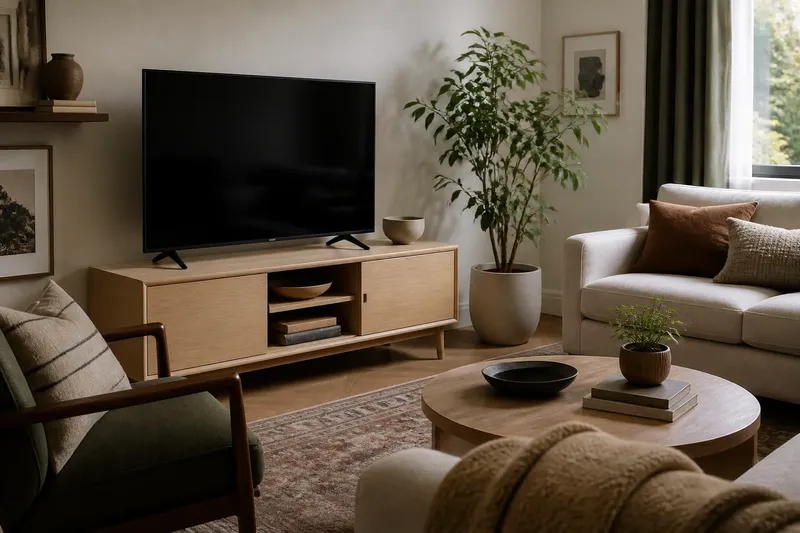
Imagine a living room with a black display, a pale oak console, and cream walls. The owner leaves the console bare and shifts a leafy plant beside it, keeping the leaves clear of the screen and its controls. The expected visible result is a contrast between the screen’s firm outline and the plant’s irregular shape, so the display reads as one part of a varied arrangement rather than the only strong form.
How should different furniture finishes relate?
Different wood tones can look intentional. A near-match that is almost, but not quite, the same may feel more awkward than an obvious difference. Instead of trying to harmonize every surface, let each finish remain distinct and keep the display area from becoming crowded with objects intended to disguise that variation.
Check the arrangement from the doorway and from the seats people use. If the screen and furniture feel balanced from those views, there may be no need for another decorative object. A clear view and an uncluttered surface can be a better choice than a forced visual link.
How can contrasting shapes feel comfortable together?
A display’s straight edges can seem severe beside rounded chairs or a soft sofa. Rather than adding more rectangular objects, allow the room’s existing shapes to contrast. A curved lamp, a round table, or a loosely folded throw can make the difference feel deliberate without pretending the objects match.
Consider how much visual weight gathers around the screen. A crowded surface can make its outline feel more pronounced, while a little open space helps the furniture and display remain legible as separate pieces. Keep objects clear of controls and ventilation, and follow the display maker’s placement guidance.
What questions help with display styling without matching furniture?
Does the screen have to match the console?
No. A console can differ in color and material if the overall arrangement feels composed from the room’s usual viewpoints. Matching every finish may make the display area feel more uniform than the rest of the room.
Can different wood tones work beside a screen?
Yes. Let the finishes remain visibly different rather than adding objects to disguise them. An uncluttered arrangement can make that contrast feel considered.
What if nothing in the room seems to connect to the display?
Do not add an accent just to fill a perceived gap. First try removing a nearby object and checking the view again; the display may feel more settled once the area has less visual competition.
Should accessories be arranged symmetrically?
Not necessarily. Different objects can balance one another when their overall visual weight feels comfortable from the main seating area. Symmetry is one option, not a requirement.
When is another matching piece the wrong fix?
A new console or frame can add bulk without improving the arrangement. Before buying anything, clear one accessory from the display area and look again from the doorway and the usual seats. If the screen feels easier to place in the room, keep the simpler arrangement; if it still feels crowded, reconsider the layout before adding furniture.
Display styling without matching furniture is less about disguising difference than allowing unlike pieces to share a room without competing. Leave some breathing space, keep useful access clear, and let the screen’s shape coexist with furniture that has its own character. A room can feel connected without making every object repeat the same visual cue.