A Shared Living Room, Reconsidered Before Guests Arrive
Shared living room planning helps you set up seating, surfaces, and screen content for a gathering, so guests can settle in without competing for attention.
Shared living room planning begins at the doorway: can a guest enter, find a place to sit, and tell what the room is for? Before guests arrive, decide what role the screen should play in that particular gathering, then arrange the room to make that choice legible.
A gathering can be conversation-led, screen-led, or a mix. The useful question is not whether the screen should be prominent in general, but what guests are being invited to do together tonight.
What should guests notice first?
Start with the gathering’s main activity. A meal, a game, a film, and an informal visit make different demands on attention. If the plan is mixed, choose the activity that should be easiest to join when guests arrive.
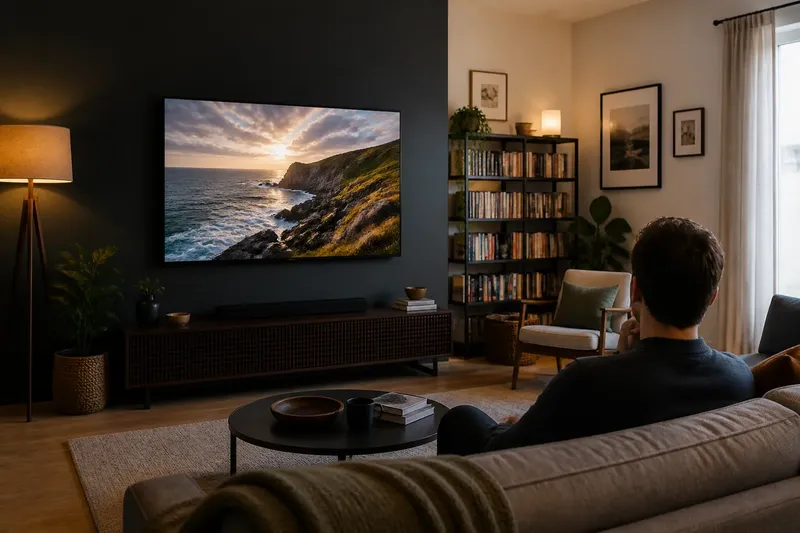
Look at the room from the entrance. Notice the first seat, the nearest useful surface, and the visual element that draws the eye. A bright screen showing unrelated content can compete with a conversation even when no one is watching it closely. For a gathering built around a film or presentation, that same display can provide a clear focal point.
Choose one of three arrangements:
- Conversation-led: Turn seats toward one another and give the group a shared place to set down drinks or snacks. Keep the screen off or on a calm, relevant display if it would otherwise pull attention away.
- Screen-led: Point the main seats toward the display and prepare the content before guests settle in. Keep a clear route to the seats so arrivals do not have to cross directly in front of viewers.
- Flexible: Let some seats face the display and others face the group. Make sure people can participate in either activity without moving furniture.
These are arrangements for an occasion, not permanent rules for the room. Think of them like place settings: each choice helps guests understand how to use the space.
How do you prepare the screen for guests?
Choose the screen’s content and state before the first guest arrives. If everyone is meant to watch, open the intended film, game, or presentation and confirm the sound is ready. If the screen is only incidental, turn it off or select a quiet image that will not compete with faces and conversation.
For a mixed gathering, decide what viewers should be able to follow. A live game may suit a visible display with sound low enough for conversation. A film usually asks for a more focused arrangement. If guests may have different preferences, say what is planned when you welcome them rather than leaving the screen’s purpose ambiguous.
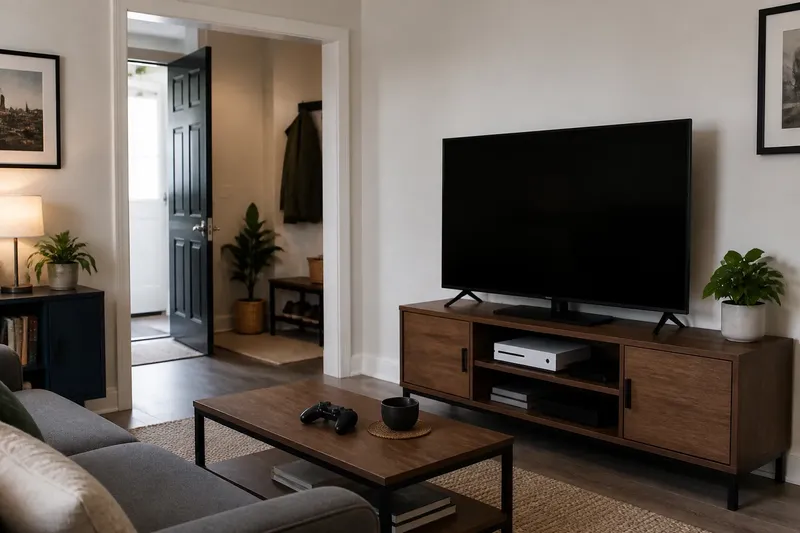
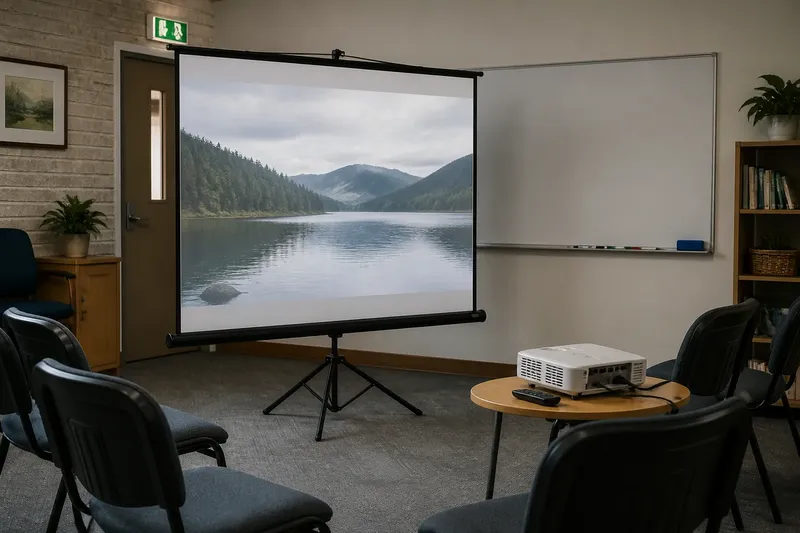
Check the remote, streaming device, game controller, or presentation connection before people arrive. Keep controls near the person who will use them, but out of the central space where guests need to place food or drinks. If the display uses a projector, keep its established setup and cords clear of walking routes; do not improvise a cable path through a busy area.
Which surfaces and seats will support the gathering?
Pick a surface for the main shared activity. A coffee table may suit snacks or a board game; a side table can keep drinks within reach without occupying the center. Clear only what gets in the way. A coaster, lamp, or bowl that is already useful need not be moved.
Arrange seats around the chosen activity. For conversation, angle a chair toward the sofa so people can see one another without forming a rigid face-to-face row. For shared viewing, orient the main seats toward the screen. In a flexible setup, keep a few seats aimed at each purpose and make sure they still feel part of one group.
Keep the route from the entrance to the seating area easy to read. Avoid placing a chair where guests must squeeze past it, and do not expect anyone to move furniture to reach an open seat. Leave large or heavy items in place unless their position clearly prevents the planned activity.
How can you choose a shared living room setup?
Should the screen be on during a conversation?
If the screen’s content draws attention away from people speaking, turn it off or choose a less active display. If the group expects occasional updates or a game in the background, keep the screen visible and make its limited role clear.
Where should guests put drinks and snacks?
Use a stable table within comfortable reach of the seats, and leave a clear area rather than covering it with decorations. If the central table would block a passage, use side tables or another nearby surface instead.
How should seats work for both watching and talking?
Give the main viewing seats a clear sightline while turning at least one movable chair toward the group. If that chair feels detached from the conversation, bring it closer without blocking the route through the room.
What should you do if guests disagree about the screen?
Choose a simple plan before the gathering, such as watching together for a set part of the evening and then switching to conversation. If no shared plan emerges, keep the display off until someone asks to use it.
What does a workable arrangement look like?
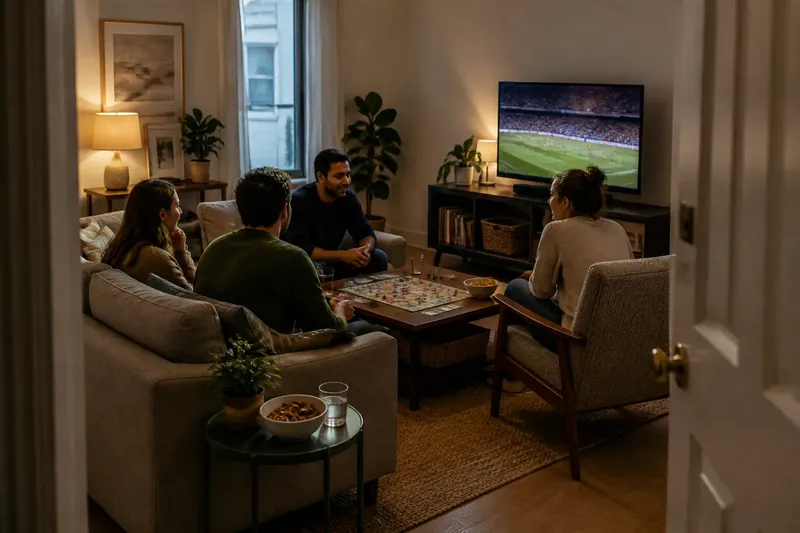
Say you are hosting a board-game evening, and the living room has a sofa facing a television, two movable chairs, a crowded coffee table, and an open side table. You want guests to play while a sports broadcast remains available for occasional glances.
First, you clear the magazines and decorative tray from the coffee table, leaving the remote beside the television rather than in the playing area. Next, you turn the two chairs slightly toward the sofa and place the game on the cleared table. You leave the side table open for drinks and keep the route from the doorway unobstructed. Finally, you choose a quiet display and low sound so the game remains easy to follow without making conversation difficult. The resulting arrangement gives the group a shared place to play, a separate spot for drinks, and access to the screen without making it the only focus.
Before guests arrive, stand at the doorway and check what the room communicates. If the seats, surfaces, and screen all point toward different activities, adjust one movable element to clarify the plan. Shared living room planning works best when the setup answers a practical question: what can a guest do comfortably as soon as they walk in?